Tuesday, March 31, 2020

13 WAYS EASTER IS CELEBRATED AROUND THE WORLD

Can you believe Easter is almost upon us? Where has the beginning of 2017 gone, didn’t we just have Christmas?!
With less than two weeks until Easter Sunday, our kids certainly don’t hold back in reminding us, and I can hear chants of,
“What do we want? Chocolate! When do we want it, now!
All around Australia kids are getting excited about Easter Egg hunts, participating in their schools Easter bonnet parade or attending the Sydney Royal Easter Show.
For us Aussies, Easter is also the first school holidays since the Christmas break and a time we like to travel and getaway over the long weekend with our families and enjoy the last warm days before winter arrives.
While this may be the norm in Australia, Easter is celebrated around the world in a surprising variety of ways, with traditions different from country to country according to their ethnic and cultural origins.
Check out these 13 Easter traditions from around the globe and the history behind them.

1. Hungary

“Sprinkling” is a popular Hungarian Easter Monday tradition, in which boys playfully sprinkle perfume, cologne or water over a young woman’s head, and ask for a kiss.
People used to believe that water had a cleaning, healing and fertility-inducing effect.
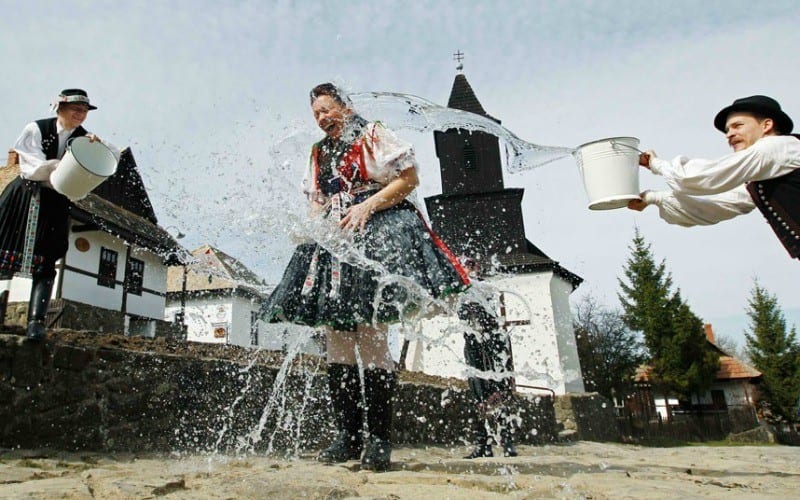
image: telegraph.co.uk
image: telegraph.co.uk

2. France

In the town of Haux, a giant omelet made with 4,500 eggs that feeds 1,000 people is served up in the town’s main square. The story goes, when Napoleon and his army were traveling through the south of France, they stopped in a small town and ate omelets.
Napoleon liked his so much that he ordered the townspeople to gather their eggs and make a giant omelet for his army the next day.

3. Brazil

Besides being crazy football fans, there’s a crazy tradition of creating straw dolls to represent Judas (the apostle known for betraying Christ) and hanging them in the streets and beating them up. And many times politicians involved in scandals become Judas.
But, it’s not all aggression, and on Easter Saturday, called ‘Sábado de Aleluia,’ inspires mini versions of Car naval in many small towns to celebrate the end of Lent.

4. Seville, Spain

One of the biggest Easter celebrations takes place in Seville, where 52 different religious brotherhoods parade through the streets manifesting the crucifixion, with thousands watching the daily processions of marching bands and decorated candle lit floats heaving with Baroque statues illustrating the Easter story.

5. Sweden

Easter in Sweden sounds a lot like Halloween to me, with the children dressing up as Easter witches wearing long skirts, colourful headscarves and painted red cheeks, and go from home to home in their neighborhoods trading paintings and drawings in the hope of receiving sweets.
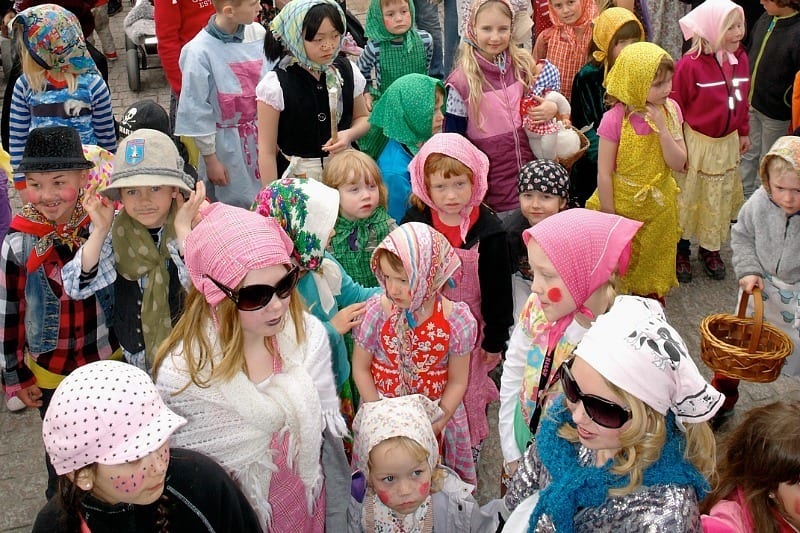
image: Upplandsmuseet
image: Upplandsmuseet

6. Corfu, Greece

The traditional of “Pot Throwing” takes place on the morning of Holy Saturday. People throw pots, pans and other earthenware out of their windows, smashing them on the street.
Some say the custom of throwing of pots welcomes spring, symbolizing the new crops that will be gathered in new pots. Others say it derives from the Venetians, who on New Year’s Day used to throw out all of their old items.

7. Indonesia

There are around seven million Catholics in Indonesia, Christianity was brought here by Portuguese missionaries, and statues from this time are carried through the streets.
Young men consider it an honour to be chosen to play Jesus and be tied to the cross in various locations.

8. Czech Republic

On Easter Monday there’s a tradition in which men spank women with handmade whips made of willow and decorated with ribbons. According to legend, the willow is the first tree to bloom in the spring, so the branches are supposed to transfer the tree’s vitality and fertility to the women.
This is meant to be playful spanking all in good fun and not to cause pain.
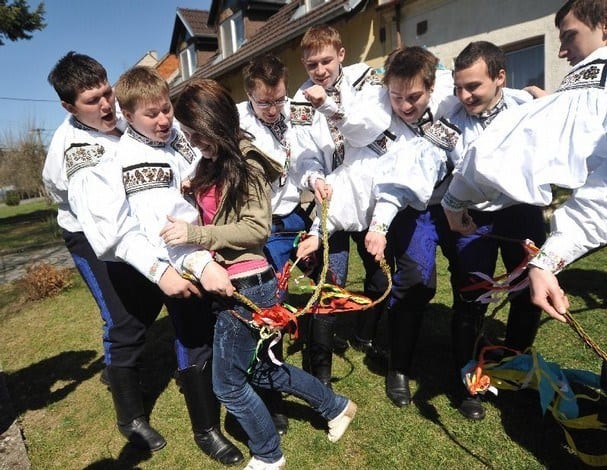
image: huffingtonpost.com
image: HuffingtonPost.com

9. Florence, Italy

A huge, decorated wagon is dragged through the streets by white oxen until it reaches the cathedral, and when Gloria is sung inside the cathedral Archbishop sends a dove-shaped rocket into the cart, igniting a large fireworks display.
Called Scoppio del Carro (explosion of the cart), this is followed by a parade in medieval costumes.

image: VisitFlorence
image: VisitFlorence

10. Bermuda

On Good Friday, the locals celebrate by flying homemade kites, eating codfish cakes and hot cross buns.
The tradition is said to have begun when a local teacher from the British Army had difficulty explaining Christ’s ascension to Heaven to his Sunday school class. He made a kite, traditionally shaped like a cross, to illustrate the Ascension.

11. Bulgaria

Here people don’t hide their eggs — they have egg fights – and whoever comes out of the game with an unbroken egg is the winner and assumed to be the most successful member of the family in the coming year.
In another tradition, the oldest woman in the family rubs the faces of the children with the first red egg she has colored, symbolizing her wish that they have rosy cheeks, health and strength.

12. Germany

Whilst in many countries Easter eggs are hidden and children hunt for them, in Germany Easter eggs are displayed on trees and prominently in streets, with some of the trees having thousands of multi color eggs hanging on them.

13. Washington D.C.

And of course in the United States, the President hosts the annual Easter Egg Roll on the White House lawn on Easter Monday.
The tradition, believed to date back to the early 19th century, involves children rolling a colored hard-boiled egg with a large serving spoon.
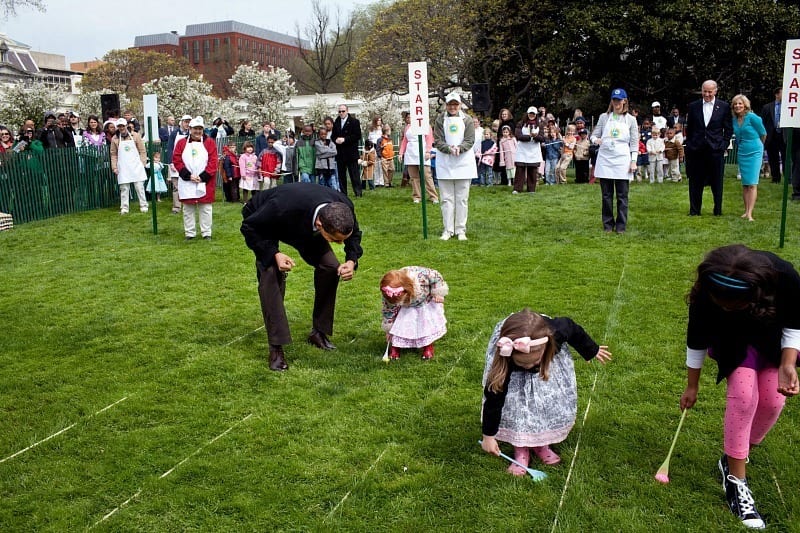
image: wikimedia
image: wikimedia
This Easter, we’ll be spending it with friends in Utah!  We haven’t decided what we’re doing yet to celebrate, but we’re hoping that we’ve found a place to live so the Easter Bunny can hide some eggs in the back garden!
You can read more about our road trip across the USA here. Be sure to follow the journey on our Instagram and YouTube.
Pop your name in the form below to join our free VIP travel tribe and not miss our personal updates and helpful travel posts.
Do you know of any Easter rituals around the world? Are you planning a long weekend break with your family?

13 unique ways Easter is celebrated around the world

Iran says 'terrorist' attack inside Turkey halts natural gas flow........

Iran's natural gas exports to Turkey have stopped after a "terrorist" attack on a pipeline inside Turkey, an Iranian official told state television.
"This morning, terrorists attacked a natural gas pipeline inside Turkey near Iran's Bazargan border with Turkey ... flow of gas has been halted," said Mehdi Jamshidi-Dana, director of National Iranian Gas Co on Tuesday.
"The pipeline has exploded several times in the past. It is also likely that the PKK group has carried out the blast," he told Iran's state news agency IRNA, referring to the outlawed armed group, the Kurdistan Workers Party.
Jamshidi-Dana said "the Turkish border guards have left" because of the coronavirus outbreak before adding that "we have informed them of the explosion and are waiting for their response", IRNA reported.
"It takes usually three to four days to repair and resume gas exports."

Turkish side confirms blast

Turkey's state-run Anadolu Agency confirmed that a blast near the Gurbulak crossing - known as Bazargan on the Iranian side - in the Agri province damaged the pipeline and halted the flow of natural gas.
Firefighters extinguished the flame caused by the explosion, the agency said, adding that military forces had secured the area.
Anadolu also said an investigation was ongoing to find out what caused the explosion.
The pipeline, which carries around 10 billion cubic meters of Iranian gas to Turkey annually, had been attacked frequently by Kurdish militants during the 1990s and up until 2013 before a ceasefire was established.
The PKK is designated a terrorist organisation by Turkey, the United States and the European Union. Some 40,000 people have been killed in the fight between Turkish forces and the PKK ongoing since 1980s.

https://pin.it/6sANaqK

Iran reports 141 new deaths and 3,111 cases of Coronavirus.

Iran has reported 141 new death and 3,111 new cases of coronavirus, writes my colleague Akhtar Mohammad Makoii.
The health ministry of Iran has announced 141 new Coronavirus death in last 24 taking the total number of Coronavirus deaths to 2,898.

3,111 new cases reported positive in the same period pushing the total number of infections to 44,606.

14,656 patients have recovered so far. The health ministry spokesman said 3,703 patients are in critical condition.

Some good context from the last few days from journalist Abas Aslani, senior research fellow at the Center for Middle East Strategic Studies:

UK: ONS figures show more deaths related to Covid-19 in England and Wales than previously reported

The Office of National Statistics (ONS) in the UK has published the first of its new weekly bulletins that will include all instances where Covid-19 was mentioned on the death certificate and will include non-hospital deaths.
A total of 210 deaths in England and Wales that occurred up to and including 20 March (and which were registered up to 25 March) had Covid-19 mentioned on the death certificate, according to figures from the Office for National Statistics.
This compares with 170 coronavirus-related deaths reported by NHS England and Public Health Wales up to and including 20 March.
A quick note on the difference between the figures published by the ONS and those that have been published thus far by NHS England and Public Health Wales:
The ONS death figures are based on the number of deaths registered in England and Wales where Covid-19 was mentioned on the death certificate as “deaths involving Covid-19”. The number includes all deaths, not just those in hospitals, although there is usually a delay of at least five days between a death occurring and registration.
The figures published by NHS England and Public Health Wales are for deaths only among hospital patients who have tested positive for Covid-19, but include deaths that have not yet been registered.
Separate figures from the ONS show that for the 108 deaths registered up to 20 March where Covid-19 was mentioned on the death certificate, 45 (or 42%) were people aged 85 and over while 34 (31%) were people aged 75-84.
A total of 21 deaths (19%) were people aged 65-74, seven (6%) were people aged 45-64 and one death was aged 15-44 years.
Follow all the latest coronavirus news from the UK in our dedicated liveblog:

Coronavirus live news: Spain reports record single-day death toll; World Bank warns of 'unprecedented global shock'

Global cases pass 750,000; Vietnam enters lockdown; Russia records biggest daily rise in cases for seventh day running
  • UK coronavirus - latest updates
  • Coronavirus epidemic ‘far from over’ in Asia-Pacific, warns WHO
  • New study reveals increased risks from middle age
  • Las Vegas parking lot turned into homeless ‘shelter’ with distance markers


  • Ireland: government advises practicing safe sex and hygienic masturbation

  • Ireland has issued guidelines on safe sex during the corona-virus pandemic, writes Rory Carroll in Dublin.
    Only be sexually active with someone you live with and who does not have the virus or symptoms of the virus, and avoid kissing anyone outside your household or who has symptoms, say the Health Service Executive guidelines.
    “Taking a break from physical and face-to-face interactions is worth considering, especially if you meet your sex partners online or make a living by having sex. Consider using video dates, sexting or chat rooms. Make sure to disinfect keyboards and touch screens that you share with others.”
    Masturbation will not spread corona-virus, it adds. “Especially if you wash your hands (and any sex toys) with soap and water for at least 20 seconds before and after.”

Coronavirus vaccine: when will it be ready?

ven at their most effective – and draconian – containment strategies have only slowed the spread of the respiratory disease Covid-19. With the World Health Organization finally declaring a pandemic, all eyes have turned to the prospect of a vaccine, because only a vaccine can prevent people from getting sick.
About 35 companies and academic institutions are racing to create such a vaccine, at least four of which already have candidates they have been testing in animals. The first of these – produced by Boston-based biotech firm Moderna – will enter human trials imminently.
This unprecedented speed is thanks in large part to early Chinese efforts to sequence the genetic material of Sars-CoV-2, the virus that causes Covid-19. China shared that sequence in early January, allowing research groups around the world to grow the live virus and study how it invades human cells and makes people sick.
But there is another reason for the head start. Though nobody could have predicted that the next infectious disease to threaten the globe would be caused by a coronavirus – flu is generally considered to pose the greatest pandemic risk – vaccinologists had hedged their bets by working on “prototype” pathogens. “The speed with which we have [produced these candidates] builds very much on the investment in understanding how to develop vaccines for other coronaviruses,” says Richard Hatchett, CEO of the Oslo-based nonprofit the Coalition for Epidemic Preparedness Innovations (Cepi), which is leading efforts to finance and coordinate Covid-19 vaccine development.
Coronaviruses have caused two other recent epidemics – severe acute respiratory syndrome (Sars) in China in 2002-04, and Middle East respiratory syndrome (Mers), which started in Saudi Arabia in 2012. In both cases, work began on vaccines that were later shelved when the outbreaks were contained. One company, Maryland-based Novavax, has now repurposed those vaccines for Sars-CoV-2, and says it has several candidates ready to enter human trials this spring. Moderna, meanwhile, built on earlier work on the Mers virus conducted at the US National Institute of Allergy and Infectious Diseases in Bethesda, Maryland.
Sars-CoV-2 shares between 80% and 90% of its genetic material with the virus that caused Sars – hence its name. Both consist of a strip of ribonucleic acid (RNA) inside a spherical protein capsule that is covered in spikes. The spikes lock on to receptors on the surface of cells lining the human lung – the same type of receptor in both cases – allowing the virus to break into the cell. Once inside, it hijacks the cell’s reproductive machinery to produce more copies of itself, before breaking out of the cell again and killing it in the process.
All vaccines work according to the same basic principle. They present part or all of the pathogen to the human immune system, usually in the form of an injection and at a low dose, to prompt the system to produce antibodies to the pathogen. Antibodies are a kind of immune memory which, having been elicited once, can be quickly mobilised again if the person is exposed to the virus in its natural form.
Traditionally, immunisation has been achieved using live, weakened forms of the virus, or part or whole of the virus once it has been inactivated by heat or chemicals. These methods have drawbacks. The live form can continue to evolve in the host, for example, potentially recapturing some of its virulence and making the recipient sick, while higher or repeat doses of the inactivated virus are required to achieve the necessary degree of protection. Some of the Covid-19 vaccine projects are using these tried-and-tested approaches, but others are using newer technology. One more recent strategy – the one that Novavax is using, for example – constructs a “recombinant” vaccine. This involves extracting the genetic code for the protein spike on the surface of Sars-CoV-2, which is the part of the virus most likely to provoke an immune reaction in humans, and pasting it into the genome of a bacterium or yeast – forcing these microorganisms to churn out large quantities of the protein. Other approaches, even newer, bypass the protein and build vaccines from the genetic instruction itself. This is the case for Moderna and another company, CureVac, both of which are building Covid-19 vaccines out of messenger RNA.
Cepi’s original portfolio of four funded Covid-19 vaccine projects was heavily skewed towards these more innovative technologies, and last week it announced $4.4m (£3.4m) of partnership funding with Novavax and with a University of Oxford vectored vaccine project. “Our experience with vaccine development is that you can’t anticipate where you’re going to stumble,” says Hatchett, meaning that diversity is key. And the stage where any approach is most likely to stumble is clinical or human trials, which, for some of the candidates, are about to get under way.
Clinical trials, an essential precursor to regulatory approval, usually take place in three phases. The first, involving a few dozen healthy volunteers, tests the vaccine for safety, monitoring for adverse effects. The second, involving several hundred people, usually in a part of the world affected by the disease, looks at how effective the vaccine is, and the third does the same in several thousand people. But there’s a high level of attrition as experimental vaccines pass through these phases. “Not all horses that leave the starting gate will finish the race,” says Bruce Gellin, who runs the global immunisation programme for the Washington DC-based nonprofit, the Sabin Vaccine Institute.
There are good reasons for that. Either the candidates are unsafe, or they’re ineffective, or both. Screening out duds is essential, which is why clinical trials can’t be skipped or hurried. Approval can be accelerated if regulators have approved similar products before. The annual flu vaccine, for example, is the product of a well-honed assembly line in which only one or a few modules have to be updated each year. In contrast, Sars-CoV-2 is a novel pathogen in humans, and many of the technologies being used to build vaccines are relatively untested too. No vaccine made from genetic material – RNA or DNA – has been approved to date, for example. So the Covid-19 vaccine candidates have to be treated as brand new vaccines, and as Gellin says: “While there is a push to do things as fast as possible, it’s really important not to take shortcuts.”
An illustration of that is a vaccine that was produced in the 1960s against respiratory syncytial virus, a common virus that causes cold-like symptoms in children. In clinical trials, this vaccine was found to aggravate those symptoms in infants who went on to catch the virus. A similar effect was observed in animals given an early experimental Sars vaccine. It was later modified to eliminate that problem but, now that it has been repurposed for Sars-CoV-2, it will need to be put through especially stringent safety testing to rule out the risk of enhanced disease.
It’s for these reasons that taking a vaccine candidate all the way to regulatory approval typically takes a decade or more, and why President Trump sowed confusion when, at a meeting at the White House on 2 March, he pressed for a vaccine to be ready by the US elections in November – an impossible deadline. “Like most vaccinologists, I don’t think this vaccine will be ready before 18 months,” says Annelies Wilder-Smith, professor of emerging infectious diseases at the London School of Hygiene and Tropical Medicine. That’s already extremely fast, and it assumes there will be no hitches.
In the meantime, there is another potential problem. As soon as a vaccine is approved, it’s going to be needed in vast quantities – and many of the organisations in the Covid-19 vaccine race simply don’t have the necessary production capacity. Vaccine development is already a risky affair, in business terms, because so few candidates get anywhere near the clinic. Production facilities tend to be tailored to specific vaccines, and scaling these up when you don’t yet know if your product will succeed is not commercially feasible. Cepi and similar organisations exist to shoulder some of the risk, keeping companies incentivised to develop much-needed vaccines. Cepi plans to invest in developing a Covid-19 vaccine and boosting manufacturing capacity in parallel, and earlier this month it put out a call for $2bn to allow it to do so.
Once a Covid-19 vaccine has been approved, a further set of challenges will present itself. “Getting a vaccine that’s proven to be safe and effective in humans takes one at best about a third of the way to what’s needed for a global immunisation programme,” says global health expert Jonathan Quick of Duke University in North Carolina, author of The End of Epidemics (2018). “Virus biology and vaccines technology could be the limiting factors, but politics and economics are far more likely to be the barrier to immunisation.”
The problem is making sure the vaccine gets to all those who need it. This is a challenge even within countries, and some have worked out guidelines. In the scenario of a flu pandemic, for example, the UK would prioritise vaccinating healthcare and social care workers, along with those considered at highest medical risk – including children and pregnant women – with the overall goal of keeping sickness and death ra tes as low as possible. But in a pandemic, countries also have to compete with each other for medicines.
Because pandemics tend to hit hardest those countries that have the most fragile and underfunded healthcare systems, there is an inherent imbalance between need and purchasing power when it comes to vaccines. During the 2009 H1N1 flu pandemic, for example, vaccine supplies were snapped up by nations that could afford them, leaving poorer ones short. But you could also imagine a scenario where, say, India – a major supplier of vaccines to the developing world – not unreasonably decides to use its vaccine production to protect its own 1.3 billion-strong population first, before exporting any.
Outside of pandemics, the WHO brings governments, charitable foundations and vaccine-makers together to agree an equitable global distribution strategy, and organisations like Gavi, the vaccine alliance, have come up with innovative funding mechanisms to raise money on the markets for ensuring supply to poorer countries. But each pandemic is different, and no country is bound by any arrangement the WHO proposes – leaving many unknowns. As Seth Berkley, CEO of Gavi, points out: “The question is, what will happen in a situation where you’ve got national emergencies going on?”
This is being debated, but it will be a while before we see how it plays out. The pandemic, says Wilder-Smith, “will probably have peaked and declined before a vaccine is available”. A vaccine could still save many lives, especially if the virus becomes endemic or perennially circulating – like flu – and there are further, possibly seasonal, outbreaks. But until then, our best hope is to contain the disease as far as possible. To repeat the sage advice: wash your hands.
 This article was amended on 19 March 2020. An earlier version incorrectly stated that the Sabin Vaccine Institute was collaborating with the Coalition for Epidemic Preparedness Innovations (Cepi) on a Covid-19 vaccine. It was further amended on 30 March to remove an incorrect reference to CureVac being a “Boston company”; its world headquarters are in Tübingen, Germany.

Monday, March 30, 2020

Coronavirus: Medical Staff Running Out Of Equipment Around The World, Netizens Concerned

Coronavirus: Medical Staff Running Out Of Equipment Around The World, Netizens Concerned

Masks Picture for illustrative purposes Image Credit: Pexels
Healthcare staff from around the world are facing a serious medical equipment shortage as they battle the deadly coronavirus and netizens are expressing their concerns.
Twitter user @TrevorCoultMC shared a clip of a medical professional demonstrating what equipment is needed before working around coronavirus patients: “This gives you an idea of how many layers of protection doctors must wear to protect themselves every day from the coronavirus.”
The Philippines
User @RicciSquadAklan appealed people to help healthcare workers in the Philippines: “We are asking you all to please help our province of Aklan. There are currently three confirmed positive cases in our province but our frontliners do not have enough PPEs [Personal Protective Equipment] to fight the virus. They use raincoats as improvised PPE. A simple retweet can do! #PPEforAklan”
The Philippines currently has over 1,000 coronavirus cases and 78 deaths due to the disease.
United States
Whereas user @marwilliamson tweeted about the US failing to allocate enough funds to provide medical equipment: “It is completely unacceptable that any doctor at any hospital in the United States is lacking the medical equipment they need in order to handle this. ... Has a government that in the most infuriating, immoral way has let down its own citizens.”
Tweep @politelyrude shared a click of her mother with a face mask on and wrote: “My mom is an ICU nurse this all the PPE she gets #Coronavirustruth”
A healthcare worker, @CorneliaLG, from New York, US tweeted: “My babies are too young to read this now. And they’d barely recognise me in my gear. But if they lose me to COVID I want them to know Mommy tried really hard to do her job. #GetMePPE #NYC”
India
In India, the situation is not any different. Reports of medical equipment shortages have been surfacing and social media users have highlighted the issue.
User @BansodNakul tweeted a picture of a newspaper clipping and wrote: “News in today's Times of India, doctors do not have sufficient N95 masks and PPE. Doctors are working day and night to safeguard our lives, yet they are not provided with adequate equipments. Doctors are our saviours but who will save them.”
Tweep @raunakbasishth shared a clip of a nurse and tweeted at Tedros Adhanom, director general of the World Health Organization (WHO) and Dr. Maria D. Van Kerkhove, infectious disease epidemiologist at the WHO: “Please watch this a nursing staff of NMCH [Nalanda Medical College Hospital] a dedicated hospital for #COVID19 in Patna a capital city of Bihar, India. There is no PPE provided by Govt. No one is ready to treating the infected patient. Due to this, all doctors are left hospital. Save us.”
Pakistan
Currently, there are more than 1,600 confirmed cases of coronavirus reported in Pakistan and medical facilitates are under immense pressure much like other parts of the world.
Despite, according to Pakistan’s foreign ministry, China sending a plane loaded with medical personnel and supplies to one of the world’s most populous nations struggling to control the spread of COVID-19, reports of PPE shortages have come out.
Tweep @ranjha001 thought that local production of masks needs to increase: “Honestly it’s not very difficult to make N95 mask, its 4 layered FDA approved mask which can be easily made in Pakistan. You just need to guide your textile sector, no need to waste billions on masks, PPE promote your home industry. Just import ventilators and Rapid Kits!”
Twitter user, @fatimaanilapk, shared a post about Umer Hussain, a textile industry businessman’s proposal: “But, today's recent update by #UmerHussain on his @facebookapp he doesnt need stitcher any more as he got connected with a huge textile stitching unit and is now in direct communication with @pdmasindhpk [rovincial Disaster Management Authority] for manufacturing and delivering PPE on very reasonable rates @ndmapk.”
Hussain had shared how he has supposedly helped curated a manufacturing chain to make low cost PPE suits, to be shipped across Pakistan.
In his post, he promised to be “transparent” and wrote to those who are hoarding medical equipment in the country to monetise on them.
“I will bring each one of you hoarders down,” he wrote.